Decide what may enter the tool
Before using any AI service, determine what information the organization is allowed to provide and which environment is approved for that information. Consider contract requirements, CUI, personal information, credentials, and sensitive operational detail. Do not assume a public AI tool is an authorized destination because the task is about compliance.
Use sanitized or fictional examples when exploring an unapproved environment. Ask the responsible owner to resolve data-handling questions before sending detailed system records. This is a workflow recommendation; any specific service must be evaluated against the actual requirements and the organization’s approved configuration.
Constrain the draft to verified inputs
Provide a clear purpose, the intended audience, the known facts, and the questions that remain open. Ask the drafting process to preserve uncertainty rather than fill gaps with plausible detail. Keep the source notes available so a reviewer can compare the output with what was supplied.
For example, if the organization has not confirmed who performs an access review, the draft should identify the owner question. It should not invent a quarterly review or assign the task to a department. The same discipline applies to system names, network connections, retention periods, and provider responsibilities.
Review facts and completeness separately
Have a knowledgeable person verify the system-specific statements first. Then review whether the text or diagram addresses the relevant requirement and objectives. A factually accurate paragraph can still omit an important part of the requirement; a comprehensive-looking paragraph can still be wrong.
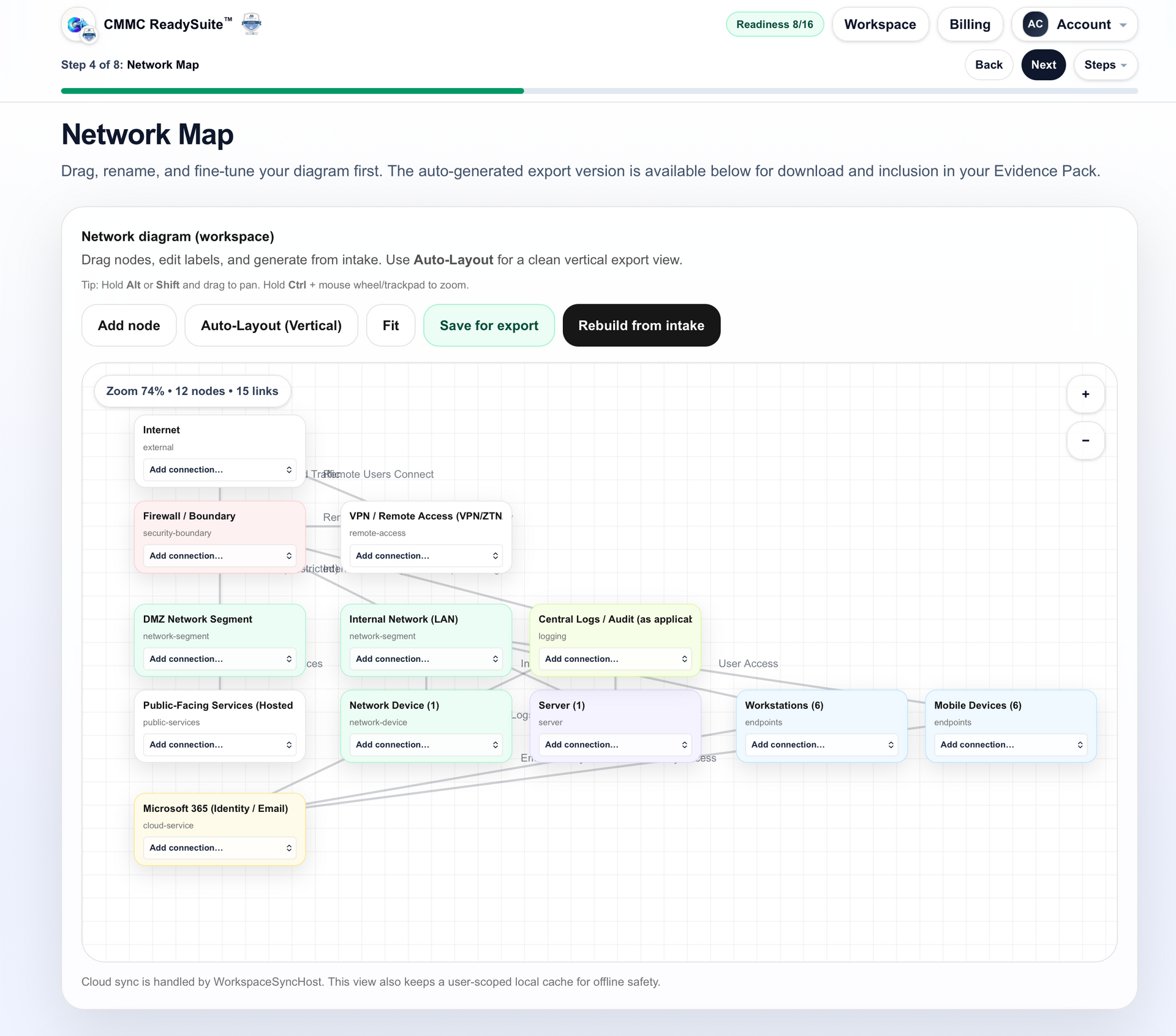
Check architecture drafts against actual inventories and connections. Check implementation notes against configurations and operating practices. Keep approval and version history appropriate to the record. If the reviewer changes the implementation description, determine whether supporting procedures or evidence references must change as well.
Preserve the boundary between drafting and assessment
A drafted policy is not a completed operational activity. A generated diagram is not proof of separation. An AI-suggested control status is not a supported assessment conclusion. Assign accountable people to review those distinctions and resolve open questions.
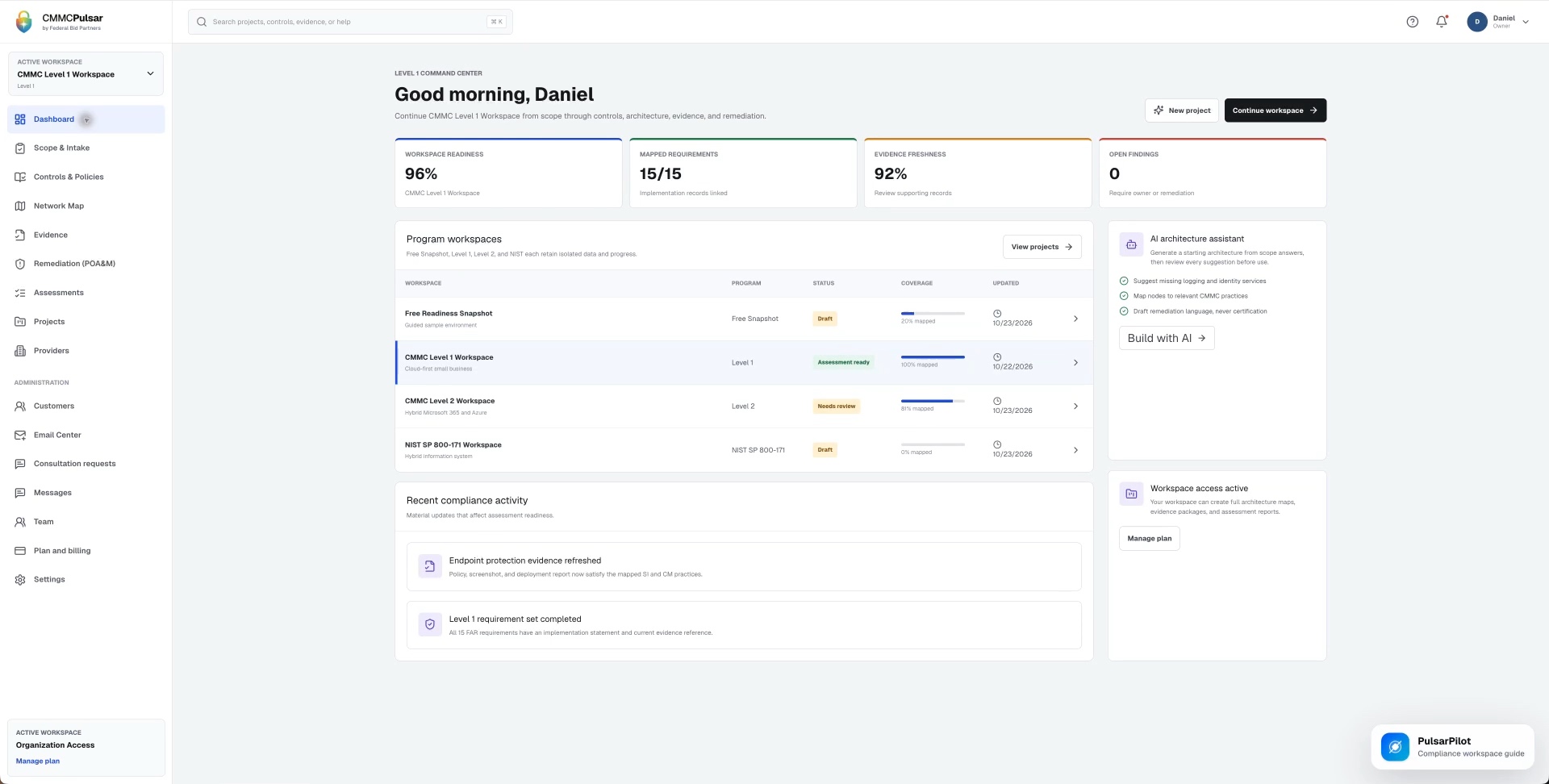
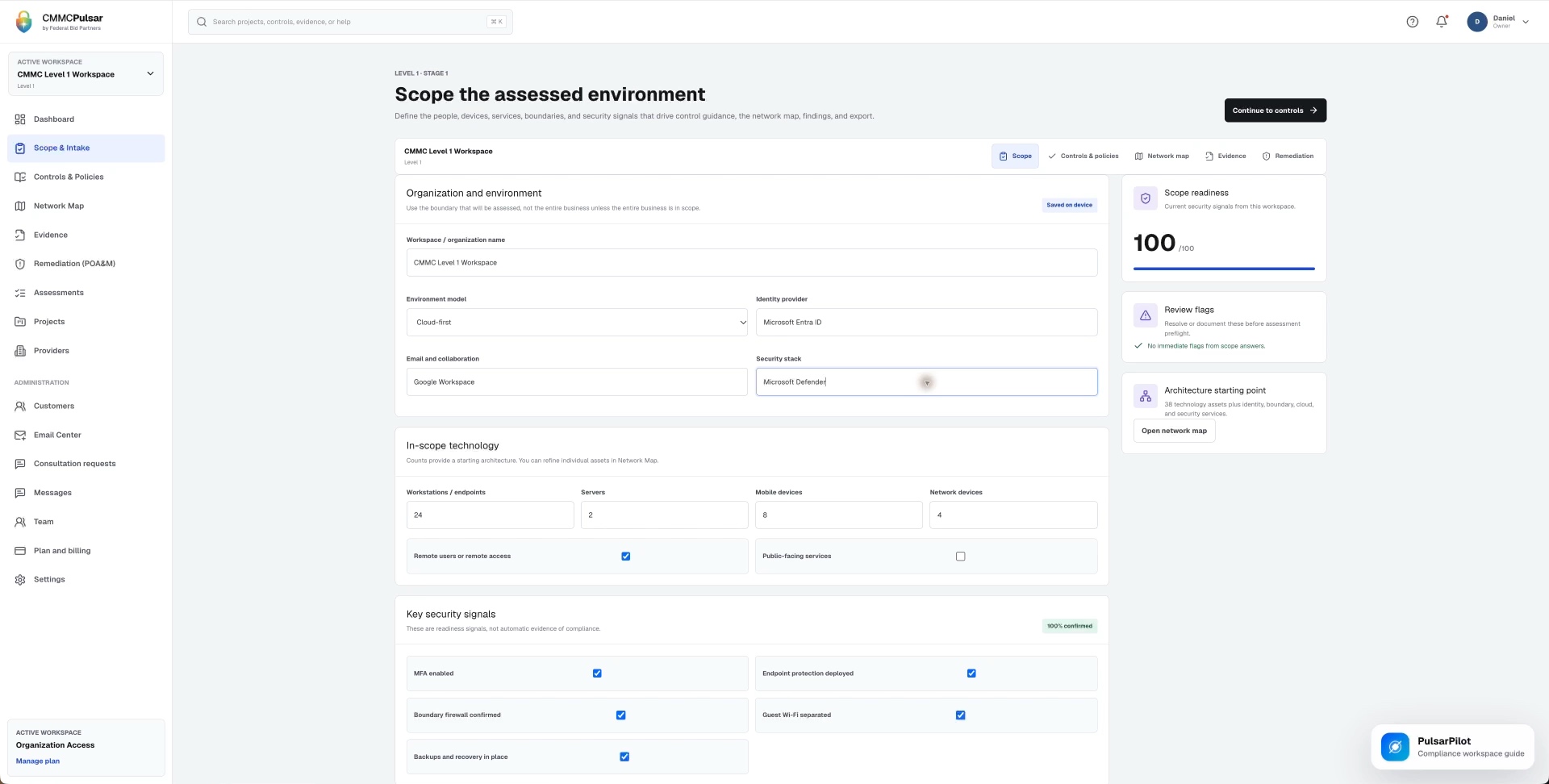
CMMC Pulsar’s connected workflow can help organize drafts alongside scope, controls, and supporting records. Explore the product tour, then use the diagram guide and SSP guide to structure human review. The software assists the work; the organization remains responsible for its environment and conclusions.
Sources & further reading
- 32 CFR 170.19: assessment scoping ↗
- NIST SP 800-171 Revision 2 and SSP resources ↗
- NIST SP 800-171A, June 2018: assessment procedures ↗
Published October 24, 2026. Government and company references were checked while preparing this page. General information and practical workflow suggestions; confirm the requirements and services that apply to your organization.